

 Home
HomeIn this article
- Why Ottawa is hard on garage door seals
- How to inspect your seals (15 minute walkthrough)
- The bottom seal (astragal): the one you’ll replace most often
- Threshold seals: when the slab is the problem
- Side and top jamb stops
- Insulated doors: the longer-term answer
- Common mistakes Ottawa homeowners make
- When to call a professional
- Frequently asked questions
Most Ottawa homeowners only think about garage door weather sealing when they can already feel the cold air rolling under their door. By then the seals have been failing for months and a winter of road salt, freeze-thaw cycles, and snow has made the job harder. The good news is that fixing your garage door weatherseal is one of the cheapest, fastest upgrades you can make to your garage, and it pays back every winter for the next half decade. Here’s what to inspect, what to replace, and what to budget for.
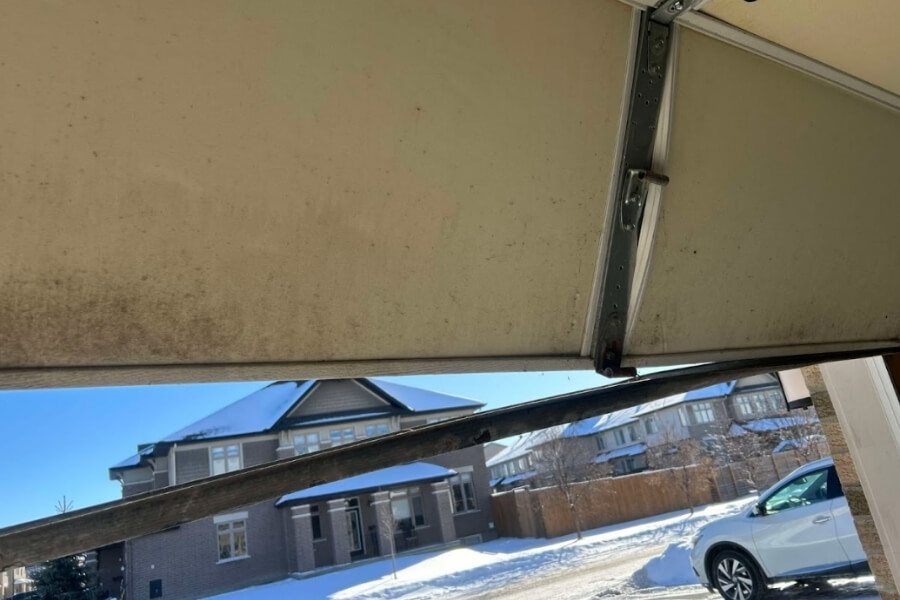
Why Ottawa is Hard on Garage Door Seals
Our city cycles between thaws and deep freezes more than 40 times every winter. Each cycle expands and contracts the rubber, vinyl, and EPDM materials that seal your garage door against the frame and the slab. After four or five winters most original seals start cracking, hardening, or pulling away from their retainer tracks. Add in the salt and grit that gets dragged in under tires and you have a recipe for premature seal failure.
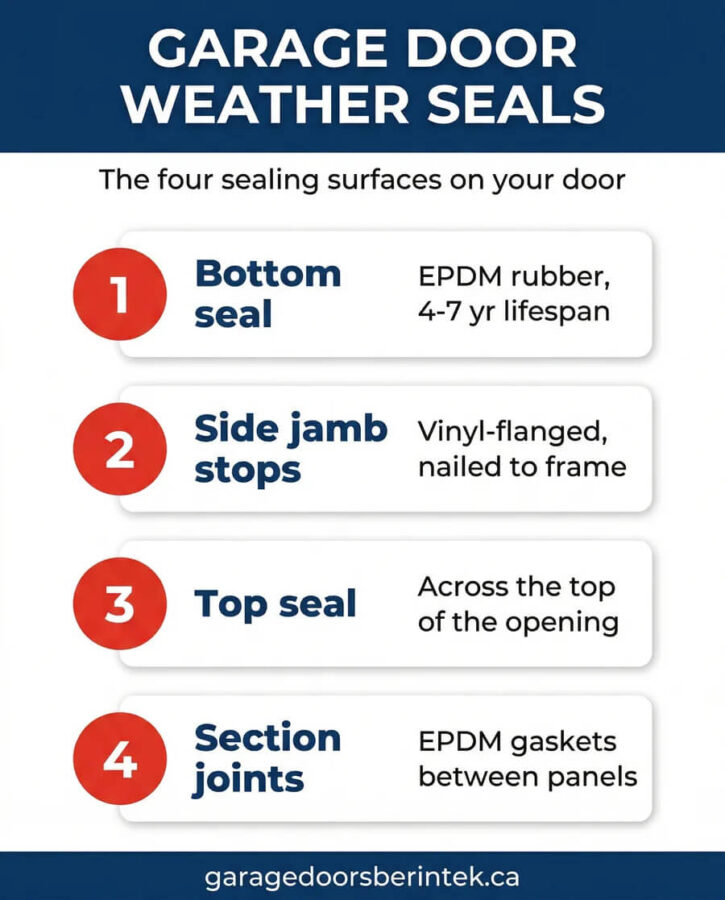
The four sealing surfaces on a residential garage door each fail differently:
- Bottom seal (the long rubber strip in the U-shaped retainer at the base of the door) is the first to go. It bears the entire weight of the door against the slab every time you close, and it’s the only seal in direct contact with road salt.
- Side jamb stops (the vinyl-flanged wood strips on the left and right of the opening) crack at the corners or pull loose from the framing.
- Top seal (the strip across the top of the opening) usually fails last but suffers when ice dams or sagging trim push it out of position.
- Section joints on insulated doors have small EPDM gaskets between the panels. These fail silently and let wind-driven snow into the garage.
How to Inspect Your Seals
Test 1: The daylight test
On a sunny day, walk into your garage with the door closed and the interior light off. If you can see daylight at the bottom or sides of the door, the seal at that location is failing. This catches about 80 percent of seal problems with no tools.
Test 2: The $5 bill test
Close the door and slide a $5 bill (or piece of paper) between the door and the floor. Pull it slowly. If it slides out without resistance, your garage door bottom seal is no longer making proper contact. Repeat at three or four spots along the bottom, uneven slabs often have one good spot and one gap.
Test 3: The hand test
On a cold or windy day, run your hand slowly along the side and bottom seals from the inside. If you feel cold air or wind, you’ve found a leak.
The Garage Door Bottom Seal (Astragal)
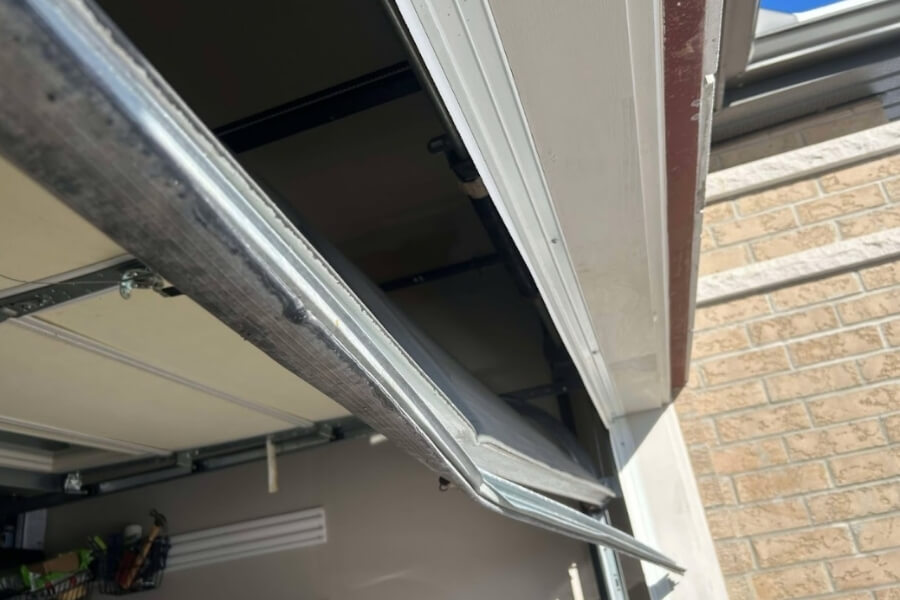
Bottom seals come in a few profiles depending on your door’s retainer track. The most common in residential homes are the T-style (a single rubber T that slides into a single-channel aluminum retainer) and the bulb style (a hollow tube that compresses against uneven concrete). Both come in EPDM rubber, which is the right material for cold climates. Avoid cheap PVC bottom seals, they harden and crack within two winters. EPDM stays flexible to about minus 40, which matches our worst nights.
Replacement is straightforward when the door is in good condition, open the door fully, slide the old seal out the end of the retainer, lubricate the new seal lightly with dish soap, and slide it in. Allow 30 to 60 minutes. If the retainer itself is bent or the door panel has rusted around the retainer, that’s a bigger job and worth a service call. If you need help fixing your garage door in Orleans, Ottawa, Nepean, or nearby, give us a call and we’ll fix your issue within the same day!
Threshold Seals Fixing the Slab Problem
Sometimes the door and bottom seal are fine but the concrete slab has heaved, cracked, or settled enough that no bottom seal can bridge the gap. In these cases a threshold seal, a wide rubber strip glued to the slab where the door meets the concrete, fills the gap from the floor up instead of from the door down. Threshold seals work well in older garages with original slabs that have moved over the decades.
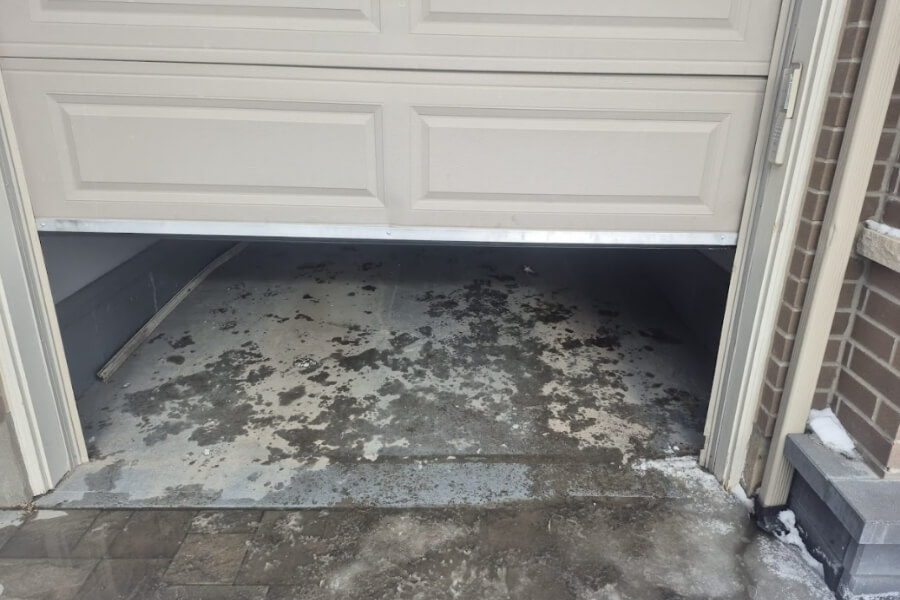
The catch is that threshold seals trap any meltwater that gets past them inside the garage. If your slab pitches into the garage instead of out, fix the slab before installing a threshold or you’ll create a small indoor lake every spring.
Side and top Jamb Stops
Side jamb stops and the top seal are usually one continuous vinyl-flanged piece nailed to the wood framing around the opening. When they fail, the vinyl flange tears, the wood backing rots from accumulated moisture, or the whole assembly pulls loose at the nails. Replacing them is more involved than a bottom seal because you have to remove the old assembly without damaging the trim, prep the framing, and re-nail the new piece with the flange compressed firmly against the door.
Insulated Garage Doors
An R-12 or higher insulated steel door makes the sealing problem much smaller because the door itself blocks heat loss across the full panel face, not just at the perimeter. If your existing door is single-skin steel or wood and you’re replacing seals every three years, it may be worth pricing a full door replacement next time. DASMA (Door & Access Systems Manufacturers Association) publishes the standard R-value definitions if you want to compare manufacturer claims, make sure you’re looking at calculated R-value, not “section R-value”, which is always the higher number.
Common Mistakes Ottawa Homeowners Make
- Replacing the bottom seal in winter. Cold rubber doesn’t slide into the retainer easily and the old seal is brittle and breaks off in pieces. Do this in spring or fall.
- Buying the cheapest seal at the big box store. The $15 vinyl bottom seal won’t survive one Ottawa winter. The $35 EPDM seal lasts 5+ years.
- Sealing the door but ignoring the man-door and windows. Air finds the easiest path. A perfectly sealed garage door doesn’t help if the side door has no weatherstripping and the window casing is cracked.
- Forcing the door closed on a buckled seal. If the new seal won’t compress properly, the opener will fight it and you’ll burn out the opener motor.
- Skipping the side and top seals. The bottom is the obvious one but the sides leak more air on a windy day.
When to Call a Professional
DIY a bottom seal swap if your retainer is in good shape and you have an hour. Call us if any of the following are true, the retainer track is bent or rusted, the door panel itself is damaged where the retainer attaches, you have a wood door (different hardware), the slab has settled noticeably, or you want a full perimeter inspection before winter. We service all of Ottawa including local garage door service in Nepean, garage door fixes in Kanata, and garage door help in Orleans.
Save this as a PDF and keep it handy.
Download: Ottawa Garage Door Weather Sealing ChecklistFrequently asked questions
How often should I replace my garage door bottom seal?
In Ottawa’s climate, a typical vinyl or rubber bottom seal lasts 4 to 7 years before it goes brittle and starts cracking. If you can see daylight under your closed door, the seal is done.
Can I weather seal my garage door myself?
Bottom seals slide into the retainer track and can be replaced by a confident DIYer in under an hour. Side and top jamb stops are nailed to the wood frame and slightly fussier. Threshold seals require cleaning, dry concrete, and proper adhesive placement.
Will weather sealing my garage door save on heating?
If your garage is attached and your home loses heat through the shared wall, a properly sealed and insulated garage can cut your winter heating bill by a noticeable amount. Sealing alone helps. Sealing plus insulation helps more.
What is the best garage door bottom seal for winters?
A T-style or bulb-style EPDM rubber seal in a heavy-gauge aluminum retainer holds up best in cold weather. Cheap PVC seals harden and crack within two winters.
Does a threshold seal cause water to pool inside the garage?
If installed correctly with a slight slope to the outside, no. If your slab pitches the wrong way, address the slab first or the threshold will trap meltwater.